Menopause is one of the most significant physiological transitions a woman will experience, and it changes almost everything about how the body responds to exercise, nutrition, and recovery. Yet most fitness programs were not designed with menopause in mind.
The average gym program built around heavy compound lifts and high-intensity cardio can feel punishing during perimenopause or menopause, when joint sensitivity increases, recovery slows, sleep is disrupted, and the body’s hormonal environment is in flux. The result is that many women in their 40s and 50s pull back from training precisely when consistent, targeted exercise matters most.
EMS training at Soma Fit Club is not a workaround. It is a genuinely better approach for what the menopausal body actually needs.
What Happens to Your Body During Menopause
The decline in estrogen that accompanies menopause triggers a cascade of physical changes with direct implications for fitness and body composition.
Muscle mass decreases. Estrogen plays a role in muscle maintenance, and its decline accelerates the natural muscle loss that comes with aging. Women in menopause can lose muscle mass faster than they did in previous decades, even if their activity levels remain the same.
Fat redistribution occurs. Fat that previously accumulated around the hips and thighs tends to shift toward the abdomen during and after menopause. Visceral fat, the type that accumulates around internal organs, increases, which carries its own health risks independent of total body weight.
Bone density declines. Estrogen is a key regulator of bone density. It’s loss accelerates bone mineral loss, increasing the risk of osteoporosis and fractures over time.
Metabolism slows. Combined muscle loss and hormonal change reduce resting metabolic rate, making it easier to gain weight and harder to lose it, even without changes in diet.
Joint sensitivity increases. Many women experience increased joint discomfort, stiffness, and inflammation during menopause, which can make high-impact or heavy-load exercise painful rather than productive.
Against this backdrop, exercise becomes more important than ever. But the type of exercise matters.
Why EMS Training Works Well for Menopause
EMS training addresses the specific physiological challenges of menopause more directly than most conventional training options.
Muscle preservation and rebuilding. EMS activates a significantly higher percentage of muscle fibers per session than conventional resistance training, making it one of the most efficient ways to rebuild and maintain lean mass during a period when hormonal conditions make this harder. Short, high-activation sessions produce the muscle stimulus the body needs without requiring long, exhausting workouts.
Bone density support. Resistance training is one of the most evidence-supported interventions for maintaining and improving bone density in postmenopausal women. EMS creates the muscular contraction forces that stimulate bone remodelling, delivering this benefit without the joint stress of heavy barbell lifting.
Metabolic support. Maintaining and rebuilding muscle mass during menopause is the most effective lever for counteracting the metabolic slowdown. Every pound of muscle your body maintains raises your resting caloric burn. EMS training is efficient enough to deliver real muscle stimulation in 20 minutes, a critical advantage for women whose recovery capacity is reduced and whose schedules do not accommodate long training blocks.
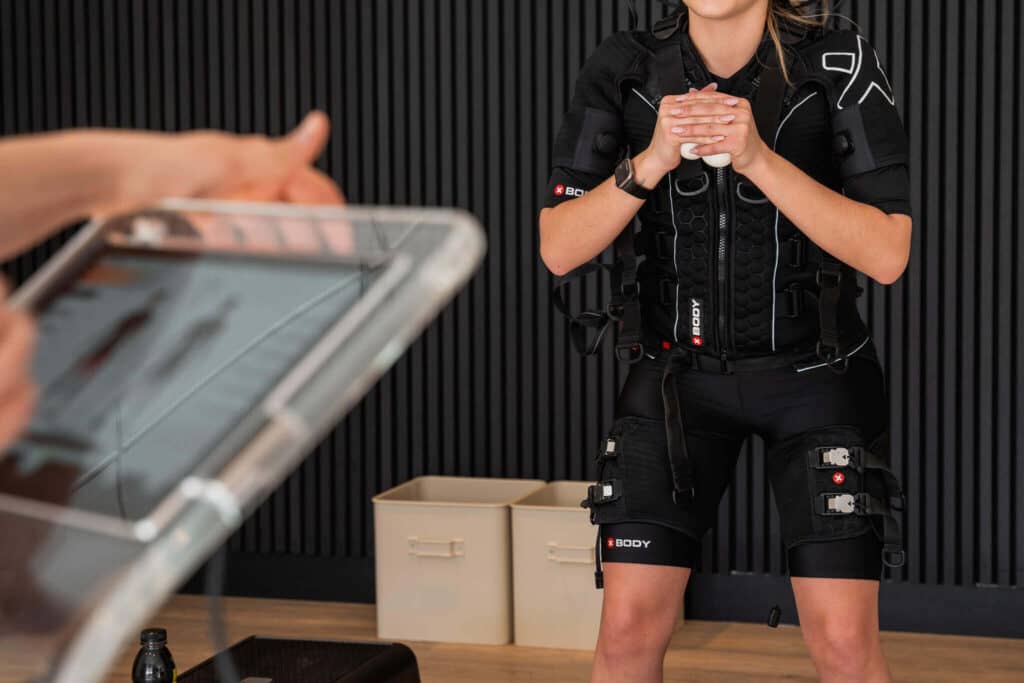
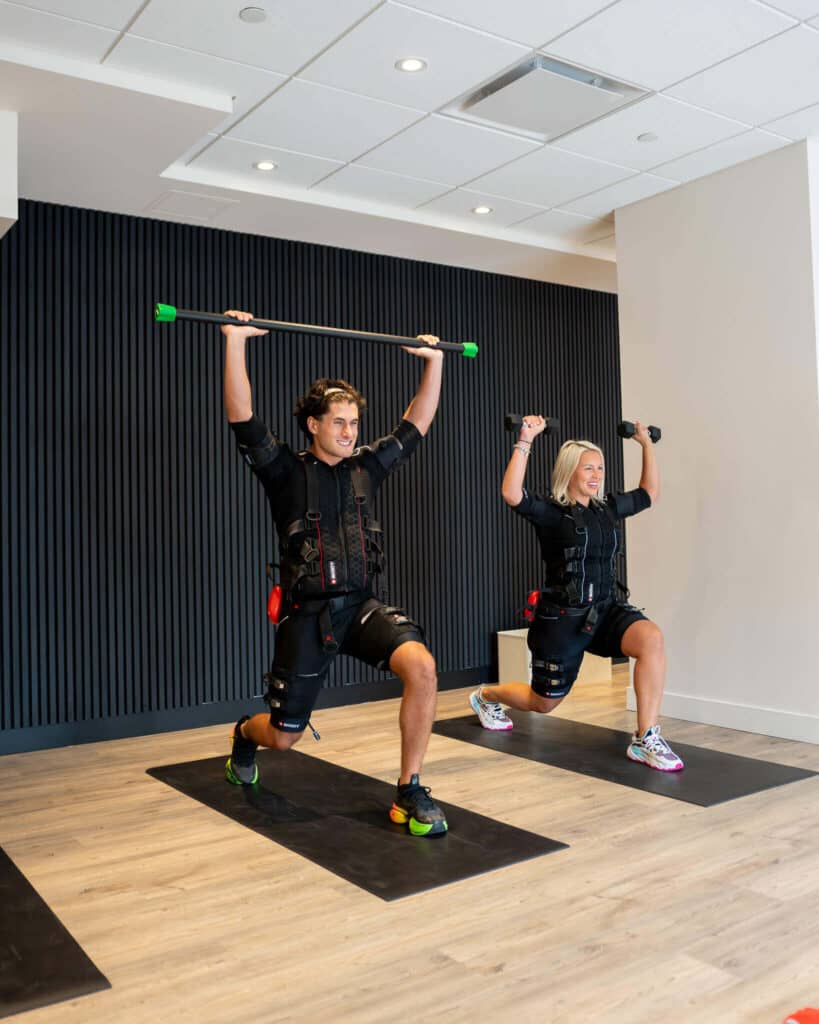
Low-impact design. EMS sessions at Soma Fit Club are inherently low-impact. There is no jumping, no heavy loading of joints, and no high-velocity movement. The training is done in a standing or functional position with controlled, trainer-guided movements. For women experiencing joint sensitivity during menopause, this difference is significant.
Individualized intensity. Because your trainer calibrates the EMS suit to your personal threshold at every session, the training meets you where you are. If you are having a difficult week due to sleep disruption, hot flashes, or fatigue, your session will adjust. You are never pushed through a standardized program that ignores how your body is functioning that day.
What Members Going Through Menopause Experience at Soma Fit Club
Women training at Soma Fit Club during perimenopause and menopause commonly report:
- Gradual reduction in abdominal and overall body fat
- Increased strength and functional capacity in daily movement
- Improved posture and reduced back pain
- Better energy levels and mood stability
- A greater sense of physical confidence and agency during a period that often feels disorienting
None of these outcomes requires hours in the gym. They require consistent, targeted training that respects what the body is going through. Three 20-minute sessions per week are an achievable commitment, even when energy is unpredictable, and schedules are full.
A Note on Perimenopause
Perimenopause, the transitional period that can begin years before menopause, is often when the first changes in body composition and exercise tolerance appear. Many women notice that their usual workout routine no longer produces the same results, that recovery takes longer, or that weight is accumulating despite no changes in habits.
This is the right time to reassess the training approach, not to push harder at something that is no longer working.
Beginning EMS training during perimenopause allows women to build strength and muscle mass while their hormonal environment is still partially protective, and to establish the training habit and baseline fitness that will serve them well through the menopause transition and beyond.
Soma Fit Club for Women in Quebec
Soma Fit Club works with women across a wide range of life stages, including those in perimenopause, menopause, and postmenopause. Our certified trainers understand the physiological context of hormonal transition and design sessions accordingly.
If you have been looking for a training approach that acknowledges what your body is actually going through and produces real, measurable results without punishing your joints or demanding hours you do not have, EMS training is worth trying.
We offer free trial sessions at our locations across Quebec, including Montreal, Griffintown, Laval, Boucherville, Rosemere, Place Ville Marie, and Quebec City.
Frequently Asked Questions: EMS Training and Menopause
Is EMS training safe during menopause?
Yes. EMS training is safe for menopausal women and particularly well suited to the physiological changes of this life stage. As with any new exercise program, inform your trainer of any relevant medical history or current symptoms so sessions can be appropriately calibrated.
Can EMS training help with weight gain during menopause?
EMS training addresses two of the primary drivers of menopause weight gain: muscle loss and metabolic slowdown. By rebuilding and preserving lean mass, EMS training helps stabilize and raise resting metabolic rate, which supports fat loss and long-term weight management.
Is EMS training good for bone health?
Yes. EMS training creates the muscular contraction stimulus associated with bone remodelling, which supports bone density maintenance. This is particularly relevant for postmenopausal women at elevated risk of bone loss.
I have joint pain from menopause. Can I still do EMS training?
EMS training is a low-impact method that does not require heavy joint loading or high-impact movement. Many women with menopause-related joint sensitivity find it one of the few training approaches they can do comfortably. Your trainer will accommodate any specific limitations.
How quickly will I see results with EMS training during menopause?
Most members notice changes in strength and body composition within six sessions. Results during menopause may progress at a different pace than for younger women, but they are real and measurable. Your trainer tracks progress from session one so you can see the data behind the changes.
Menopause does not have to mean losing ground on your fitness. Book your free trial at Soma Fit Club and find out what the right training can do for where you are right now.